
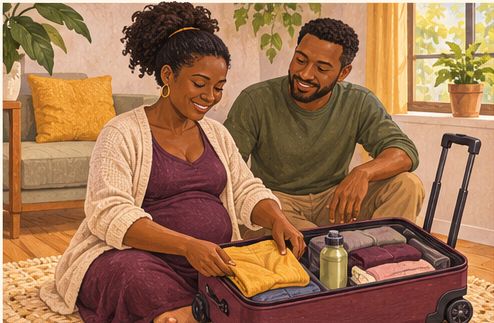
Hurricanes, wildfires, floods and long power cuts don’t wait for a due date. When roads close and phone lines jam, the usual advice, “call your midwife” or “go to the hospital”, may not work for hours or even days. A plan made now, while things are calm, is what keeps you and your baby safe. Here it is, in five steps.
Ask your care team three questions now
Your midwife or doctor knows your pregnancy. Get their answers before you need them, and write them down.
Know three hospitals, and leave early
Pick your usual hospital plus two others in different directions, with a route to each and a place you could stay nearby. If a warning comes late in pregnancy, leaving early toward care is safer than waiting at home.
“The safest emergency birth is the one that happens in a hospital, because you left early.”
Plan for when phones stop working
Calls can fail when networks are overloaded. In many US areas you can text 911, and newer phones can send an emergency message by satellite. Keep a written note of your due date, medical details and address, so a helper can carry it for you. If labor starts and you can reach 911, stay on the line: a dispatcher can talk you through the birth.
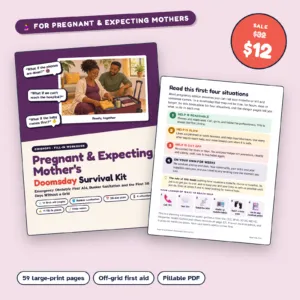 Pregnant & Expecting Mother's Doomsday Survival KitHealth$12
 Grandma's Doomsday Survival Kit, Illustrated EditionFamily$12
 Grandma's Doomsday Survival Kit, Print-Friendly EditionFamily$10
Pack two bags and a clean birth kit
One bag to grab and go, one supply to stay put, and one small sealed kit in case the baby arrives before help. The CDC suggests at least a 7 to 10-day supply of your medicines and prenatal vitamins.
- Go-bag: pregnancy records and ID, medicines and prenatal vitamins, phone and power bank, flashlight, snacks, water, maternity pads and a change of clothes.
- At home: water (at least 1 gallon per person per day, plus extra for you), food that needs no cooking, warmth and light for two weeks.
- Clean birth kit: soap, medical gloves, clean towels and sheets, clean sharp scissors and cord ties (or a sealed emergency birth kit), sanitary pads, a nasal suction bulb, a baby hat and blanket, and garbage bags.
Learn the danger signs by heart
These can be signs of a life-threatening problem, during pregnancy and in the year after birth. Get medical help straight away if you notice:
- A headache that won’t go away, dizziness or fainting, or changes in your vision
- Trouble breathing, chest pain or a fast-beating heart
- A fever of 100.4 °F (38 °C) or higher
- Severe belly pain that doesn’t go away, or severe nausea and vomiting
- Extreme swelling of your hands or face
- Vaginal bleeding or fluid leaking
- Your baby moving less, or stopping
- Thoughts of harming yourself or your baby
Would you know what to do?
What if the baby comes before help?
What if the bleeding doesn't stop after the birth?
What if you're on your own for weeks?
Find the answers in the bookPregnant & Expecting Mother's Doomsday Survival Kit$12This guide is general information, not medical advice. Your own care team’s advice always comes first.
Sources: CDC: Emergency preparedness and pregnancy · CDC Hear Her: Urgent maternal warning signs · CDC: Emergency kit checklist for pregnant women · ACOG: Preparing for disasters · Ready.gov: Make a plan