
Your child can probably chant “one, two, three…” all the way to ten. But ask them to bring you seven spoons, and something interesting happens: they count to seven and hand you a fistful. That gap, between saying numbers and understanding them, is exactly what ages 3 to 6 are for. And it matters more than most parents realise.
Early math skills at school entry were the strongest predictor of later school achievement, in math and even in reading.
That’s the finding of a large study that combined six long-term studies of children (Duncan and colleagues, 2007). Early number skills predicted later success more strongly than early reading or attention did. In the US, kindergarten expects children to write numbers from 0 to 20 and count up to 20 objects. The years before that are where the foundation is built, and it only takes a few minutes a day.
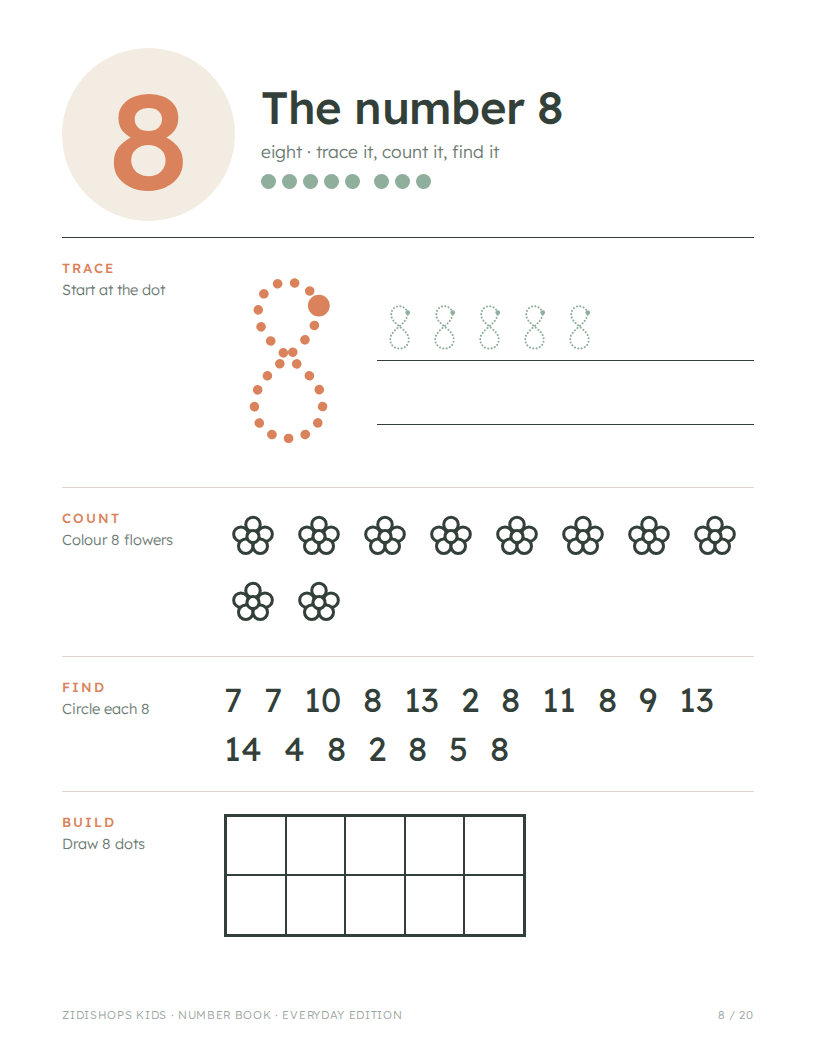
Say it, then trace it
Seeing “7”, saying “seven” and writing it are three different skills. Tracing a big number with a finger, then a crayon, ties them together, and builds the small hand muscles your child needs for writing everything else.
Count by touching
Children often count faster than they point, so they skip pictures or count one twice. Touching each picture once while saying one number is the skill that makes counting accurate. Then comes the big idea: the last number you say tells you how many there are.
Find it among look-alikes
Is it 6 or 9? 12 or 21? Spotting one number among others trains your child to look closely at the shape of each digit, which is why so many children write some numbers backwards for a while.
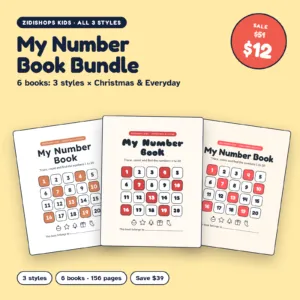 My Number Book BundleBooks$12
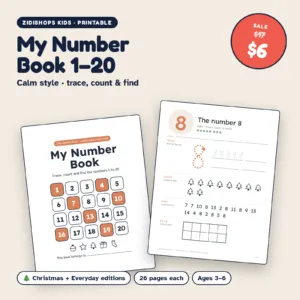 Number Book: Calm styleBooks$6
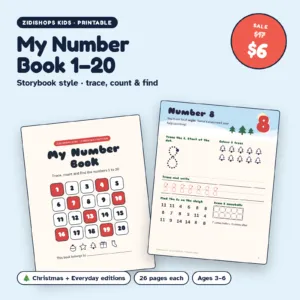 Number Book: Storybook styleBooks$6
See numbers in tens
A ten frame is a simple box of ten squares. When a child fills seven, they see “five and two more” and “three less than ten” at a glance. It’s how children start to understand numbers without counting one by one, and it prepares them for adding and for numbers over ten.
Little and often wins
Ten calm minutes a day does more than an hour on a Sunday. Young children learn by repetition, and they remember best when practice ends while it’s still fun. One number a day takes you from 1 to 20 in four weeks.
Sources: American Psychological Association: Early math and reading skills predict later school success (Duncan et al., 2007) · Common Core: Kindergarten counting and cardinality
Would you know what to do?
How do you help a little brain truly understand numbers, not just say them?
Could they count 14 apples without skipping one?
Which numbers do they still write backwards?
Find the answers in the bookMy Number Book Bundle$12