
Your brake pedal sinks to the floor on a steep hill. A tire explodes at 65 mph. The road ahead disappears under brown water. Most drivers have practised none of these, and an emergency gives you about three seconds to decide.
The brake pedal sinks on a downhill
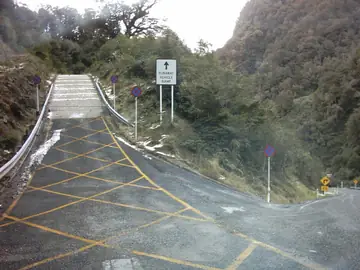
You press the brake and it goes almost to the floor. The car keeps picking up speed.
Pump the pedal, or press and hold? The right answer depends on one thing you can feel through your foot. What is it?
And the parking brake: there is a right way and a wrong way to use it at speed. One of them can lock your wheels.
The three moves, in order, are on card 1 of the cheat sheetYour foot is off, but the car keeps accelerating
A stuck pedal or a trapped floor mat, and the engine is still pulling.
There is one control that separates the engine from the wheels in under a second, and it isn’t the key. Could you find it in your car without looking down?
If your car has a start button, pressing it once at speed may do nothing at all. Do you know what your car needs instead?
What to do, and what never to do with your hands, is on card 2A tire blows at highway speed
A bang, a shudder, and the car pulls hard to one side.
Your instinct will tell you to do one thing straight away. It’s the thing that turns a blowout into a crash. Which one?
Bonus question: the tire pressure printed on your tire is not the pressure your car needs. So where is the right number?
The three steps that keep you in your lane are on card 3On a wet road, the steering goes light
Your tires are riding on a film of water instead of the road.
Brake, or not? Steer, or hold still? And what sound warns you before it happens?
Card 4 covers hydroplaning, and wheels dropping off the road edge
Driver’s Emergency Cheat Sheet
- 10 road emergencies, one card each
- 3 steps per card, with bold first words you’ll remember
- The detail most drivers miss, on every card
- Made for your phone: read it once while parked
Water across the road
The car in front made it through. Should you follow?
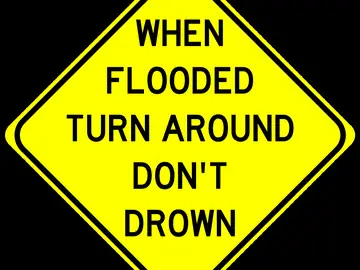
No. This rule is free, because it saves lives: turn around, don’t drown. Just 12 inches (30 cm) of moving water can sweep a car away, and the road underneath may already be gone.
But if you’re already trapped in fast water, should you get out or stay in? And if the water starts rising inside the car, where is the safest place to be?
The answers are on card 5Your car goes into a lake
This is the one most people get wrong, mostly because of films.
Free safety rule: never wait for the car to fill with water before trying to get out. That advice from the movies costs lives.
Seat belt, window, children, phone: in which order? Which child do you free first? And why might your escape hammer bounce right off the window?
The order, and the glass check to do tonight, are on card 6Smoke from under the hood
Pull over, switch off and get everyone out, and never go back for belongings. That much is free.
How far away is far enough? And which part of the car must you not open, even though every instinct says “look”?
The distance and the rest are on card 7Stalled on railroad tracks
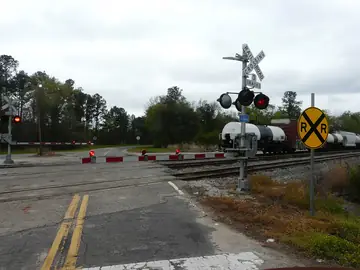
The car dies across the tracks and the warning lights start flashing.
Which way do you run? Most people would get it backwards.
And if no train is coming yet, there is a phone number posted at most crossings that can stop the trains. Have you ever noticed where it is?
Both answers are on card 8Three red lights on your dashboard
Some warning lights mean “book a service”. Three of them mean “get off the road now”. Could you name all three, and tell them apart from the harmless reminders that look almost the same?
The three lights, drawn so you can recognise them, are on card 10How did you do?
Count the situations where you were sure of your first three seconds.
- 7 or 8: impressive. Check your answers against the cards anyway, especially the sinking car.
- 4 to 6: like most drivers. The gaps are usually the ones that matter most.
- 0 to 3: you’re honest, and you’re in good company. Ten minutes in a parked car fixes this.
 Driver's Emergency Cheat SheetFamily$5.99
 Grandma's Doomsday Survival Kit, Illustrated EditionBooks$12
 Pregnant & Expecting Mother's Doomsday Survival KitHealth$12
Would you know what to do?
What if your car goes into water with your children in the back seat?
What if your brake pedal sinks halfway down a mountain road?
What if your car stalls on the tracks and the lights start flashing?
Find the answers in the bookDriver's Emergency Cheat Sheet$5.99This guide is general information for drivers of passenger cars. In an emergency, call 911 or your local emergency number.
Flood safety: US National Weather Service: Turn Around, Don’t Drown. Every answer in the cheat sheet links to its official source. Photos: escape ramp by Ingolfson and flood sign by StickyChannel92 (public domain); railroad crossing by The Bushranger (CC BY-SA 4.0), via Wikimedia Commons.